Instead of just writing about a conflict, being in the conflict

In class a few weeks ago we watched the documentary entitled “Reporter” by Nicholas Kristof. Kristof has won the Pultizer Prize twice for this documentary about reporting in conflict areas such as Darfur and the Congo. His bravery and courage is not in question, but towards the beginning of the film I wondered, “Instead of only helping the people in trouble, is reporting enough?” As the film progressed Kristof saw people starving and dying and reported on these events and the conflicts at large. The humanitarian in me wondered why they didn’t help these people. When they helped a woman named Yohanita who was raped by a soldier, dying of starvation and taken to the hospital where she died shortly after struck my idea down. Kristof argued that there were millions of people just like Yohanita who have died because of the Congolese Rwandan conflict, and when put on paper, people only cared about the one person. Since 5.4 million is a daunting number, when people read the statistics, they only feel sorry for a few seconds because that fatality rate is not a number people can wrap their heads around, according to Kristof. I later realized that it was effective to report on these issues because people need someone to angle the idea so people will care.
Screen Shot 2012-12-10 at 3.48.25 PM
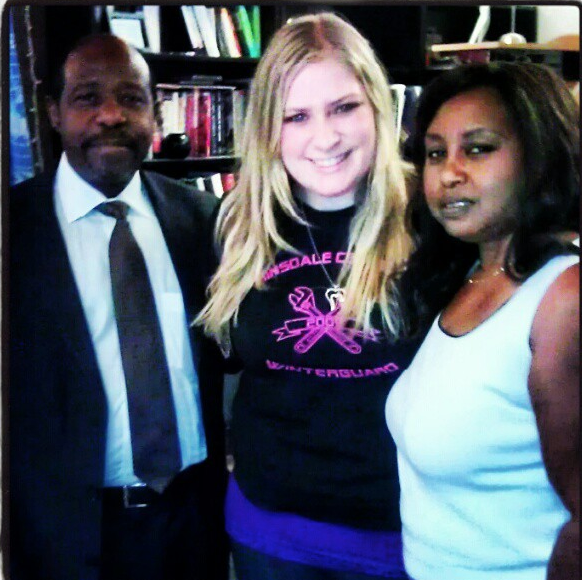
From left to right: Paul Rusesabagina, me, his wife Tatiana Rusesabagina

On a related note, I was an intern for the Hotel Rwanda Rusesabagina Foundation last summer and learned more about the Rwandan genocide in a perspective I could have never imagined. I met Paul Rusesabagina, his wife Tatiana, and his children through that experience. Paul is an inspiring man. He saved about 1,300 refugees by giving them shelter in the hotel he was managing in Kigali during the Rwandan genocide in 1994. The first time I watched the movie “Hotel Rwanda,” based off his story, it made me sympathize and feel sorry for those people. Watching the movie after meeting Paul was a completely different experience. Being able to see what happened while watching the movie a second time and the pain he endured through was almost hard to watch. Feeling sorry for an actor in a movie based off historical events and understanding the pain for a person you met while watching the same movie changes things. Working in that internship helped me to be able to advocate for Paul and people of Rwanda in an active way. It took a burden off my conscience and helped me to be able to understand a complex concept and be able to help in a tangible way. I will remember that experience for the rest of my life, and in Paul’s words:

“History keeps repeating itself but doesn’t teach us any lessons. ‘Never again’ has turned into ‘again and again and again.’…Take Hotel Rwanda as a wake-up call and a message to be our messenger that people are the ones who can change what they want to change.”

The Holiday Season is upon us!

I wrote a story today about the Mizzou Forestry Club having their annual Christmas tree sale this weekend and next weekend at the Reactor lot off Providence Road. Ben Tiefenbrun, manager of the MU Turkey Farm Lake and member of the club, said they relocated from Memorial Stadium because of construction.

This article was interesting because I learned that the Forestry Club raises money to go to a lumberjacking conclave. It’s like a lumberjacking carnival, expo, competition thing for Midwestern college students. Like the timber Olympics. Although I did not put a lot in the story about the conclave, it sounded pretty cool. They have events like cross-cut sawing, underhand chopping, ax throwing and pulp toss. Tiefenbrun said the last place winner won a cross-cut saw that was worth $3,000.

I talked to the president of the Forestry Club, Abby Kircher, and she said as one of the few girls in the club and at the conclave. As one of the few, she said she did a lot more events than some of the other members and said it is quite the workout.

It’s impressive for me if a girl carries anything weighing 50 pounds. It’s a whole new level if you can chop down a tree. That’s pretty awesome.

Back to the tree sale, Kircher said she enjoys the sale because she can help kids and families find their perfect tree and kick off the holiday season.

I don’t know about you, but when I think of summer I think of fresh cut grass; but when I think of winter, I think of the smell of Evergreen from my Christmas tree in my living room.

Diversity event featuring Martin Luther King III

The city of Columbia is hosting their 20th annual Columbia Values Diversity Celebration Jan. 17th 2013. The event is going to have keynote speaker Martin Luther King III, Martin Luther King Jr.’s son.  It will be held from 7 a.m. to 8:45 a.m. at the Holiday Inn Expo Center, 2200 I-70 Drive Southwest. Tickets are only available in advance and are $14. The deadline to register for the event is 5 p.m. on Jan. 11.

The theme of this event is “the Dream Revisited,” recognizing people of Columbia with the same qualities as Martin Luther King Jr.

The city of Columbia will give 2 awards, one to an individual, another to an organization that demonstrate diversity and the dream of MLK.

At the 10th event the keynote speaker was Bernice King, the daughter or Martin Luther King Jr. Cari Utterback said. She said having Martin Luther King III at the 20th event will make it special. Having King III there will honor Martin Luther King’s legacy.

“Martin’s dedication to creating and implementing strategic nonviolent action to rid the world of social, political, and economic injustice has propelled him to the forefront as one of the nation’s most ardent advocates for the poor, the oppressed, and the disillusioned,” according to Martin Luther King III’s website.

I think it is a great thing that King III is going to be in Columbia to influence people’s lives and help the advocacy of diversity for our community.

Homecoming!

I wrote a brief about all the Homecoming events this weekend. This will be Mizzou’s 101st Homecoming and there will be a spirit rally featuring indie band Imagine Dragons, a pancake breakfast, the Homecoming parade, the game of course and more. I’m excited for it even though I have to march at 6:15 am on Saturday and it will be less than 50 degrees all weekend. I’ve had a ton of midterms and preparation for homecoming, I’m excited to be a part of it and excited for it to be over. There will also be house decorations in Greektown, my sorority’s theme is the Mayans because the theme is “Homecoming and the Eras.” It has been a lot of work but this will be a Homecoming to remember!

Journalism Isn’t Always a Public Forum?

Charles Davis talked about on Monday how journalists have to get permission to film/write/take pictures etc in places that are not considered a public forum. This is very important because it may offend the person’s involved and can get you in trouble. There is much debate as to what is a public forum anymore, and if journalists have the right to report without consent. It is important for journalists to get consent, not just from a legal standpoint, but if you are on fair ground with your interviewees, corespondents, etc. you can get a better story because they trust you. It is really easy to get access to certain areas by just asking who is in charge,  but if you beat around the bush, they may not give you permission to do your story. Talking to others and getting permission to film, etc. is one of the key things in being a journalist, understanding your limits and figuring out what to do with them and create alternatives. It is better to work with the system than against the system.

Lonny Magazine

In class on Monday we discussed online magazines and if other print magazines should convert to an online format. The example we used was an entirely online magazine called Lonny. I went to the website to check out the magazine and it read like a normal magazine would, just not manually turning pages. The quality of the pictures was unbelievable, it looked like I was reading a high definition magazine. This can definitely bring in more readers because it catches the eye. Two other magazines I saw were High Gloss and Rue, both online. They had similar themes, home decorating and life style, image heavy topics. I thought these magazines, including Lonny, focused more on pictures than on articles and stories. The magazines on newsstands also have predominantly images for content, but I feel that those have more writing and thoughts. I found an article from the New York Times about Lonny and other online magazines for further insight. When we took a survey in class of how many people would read an online publication, not many did. Even though we are in the age of technology, people still like being able to hold something and turn the pages. Lonny is an amazing magazine, people just have to prepare for the new age in magazine platforms.

“The Greatest Show on Earth: Fashion Circus.”

image

image

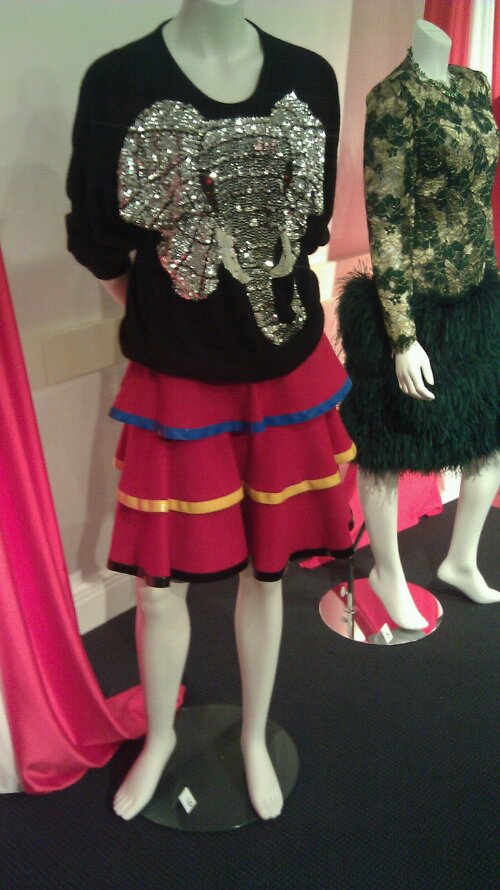
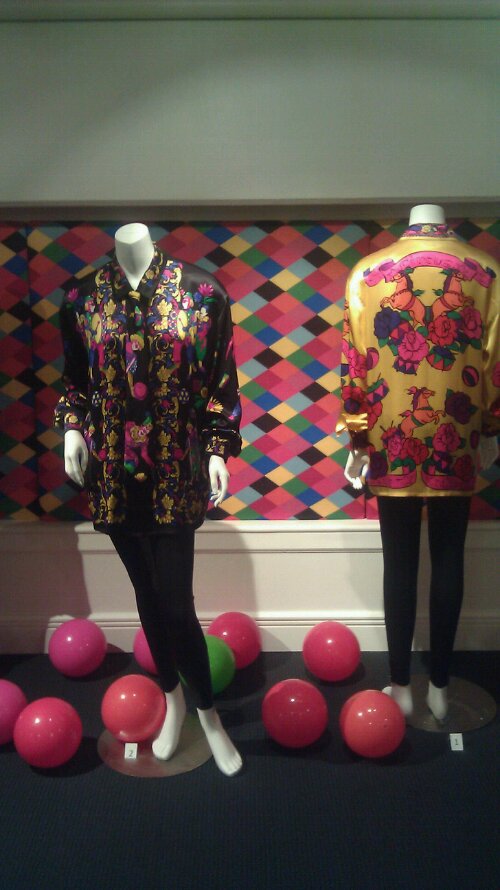
At the Stephen College Museum and Research Library there is an exhibit called “The Greatest Show on Earth: Fashion Circus. It is an exhibit that runs from September 10-December 15th 2011. This exhibit is located on the mezzanine level of Lela Raney Wood Hall on 6 N. College Ave, Columbia Mo. Elizabeth Hamman a sophomore at Stephens who is a fashion design major says that there is an,

“archive of 13,000 pieces downstairs, we pick a theme and bring out as many pieces as we can to fit that theme, a collection.”

The curators, Jennifer Cole and Bradley Meinke, choose a theme every semester to put in the gallery for alumnus and students alike to view and appreciate. The archive consists of garments donated by alumnus and pieces that are collected for fashion students to reference for their studies. Last semester, they had a theme about business attire and next semester they are pitching an idea of a gallery inspired by art pieces. The two garments I chose in these pictures are from the exhibit. The first is a black sweater with sequined elephant applique. The designer is Oleg Cassini circa 1980. It has a red tiered skirt is designed by Fiorucci, donated by Nestor circa 1984. The other picture is a black circus print blouse with a tie, and a hot pink silk circus print blouse, designed by Escada, donated by Meinke.

Key Tips to Avoid Failure in a Design Blog

In class we talked about how to make an efficient graph to get your readers to understand the point you are trying to get across. The speaker, Nathan Fleischmann, talked about how not to use the color red for an upward trend because people associate red with loss in business. The four steps of graphic design, Fleischmann said, was to research, edit, plot, and review. Therefore, research would imply using authoritative sources and to avoid bias. Edit would imply identifying your message and make sure you are getting what you want across. Plot is using a chart or graphic that your readers can understand to concise your topic. Review signifies checking your data from your sources, using your judgement on your graphic, and to look at your graphic from your reader’s perspective. I found an article entitled “Why Your Design Blog is Failing.” The three “secrets” they had were 1.) You must solve problems for your readers. The article talked about how having a “How To” article is helpful to readers. 2.) You must know who your target audience is. The article discussed how to make sure what you are blogging about pertains to your target audience, and who you want your target audience to be, whether it be clients or fellow designers. 3.) You must stay involved on your own blog. The article says to make sure you are staying involved with your readers such as tutorials and Q & A. If you stay involved, your audience will stay more involved. And finally, 4.) You must learn how to define success on your blog. In order to have success on a blog you have to make sure you have goals for the blog. Whether it be subscribers, views, replys, having other designers notice you, etc. If you have a set goal, you can see how successful you want to become and see your progress. These ideas are important and can help a person strive on the path to achievement in creating graphics and a blog.

Need for More Mobile News

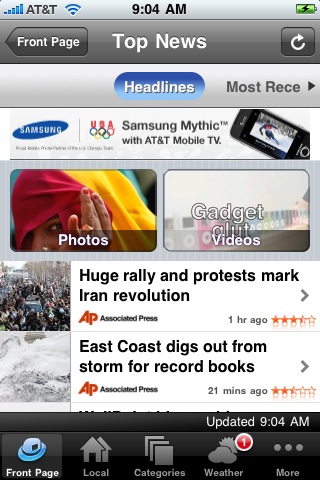
We learned in class on Monday that mobile apps are taking over long term leisure. Since people are always on the go, they check their phones for a quick joke, or a short headline about the news. In an article from the Project for Excellence in Journalism, “Just 13% of all mobile device owners report having an app that helps them get local information or news, which represents 11% of the total American adult population.” This means that many people are not getting their news on their phones because they don’t have time to read it. They also might not want to pay for these apps. “just 10% of adults who use mobile apps to connect to local news and information pay for those apps. This amounts to just 1% of all adults.” People want information that’s fast, concise, and cheap (perhaps free). News sources should consider this into their publishing and should perhaps create apps to appease the masses in order to create revenue for their companies.

Vox Magazine

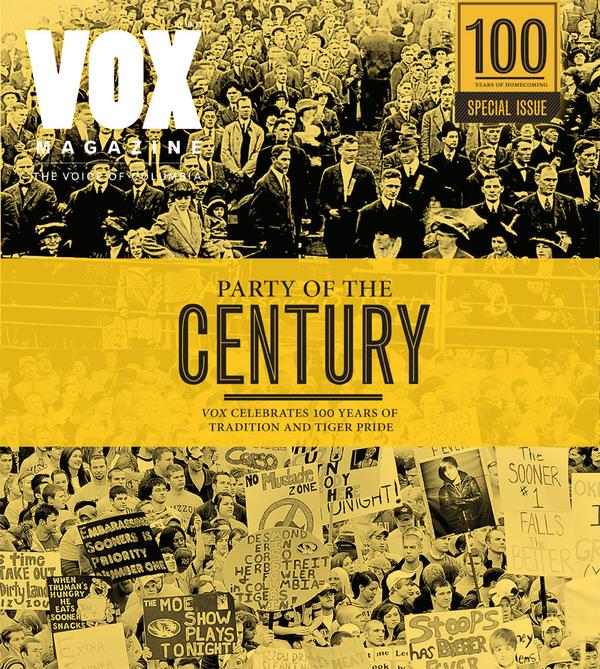
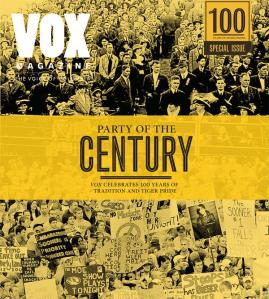
In class on Monday we discussed the different journalism emphases of our school, The University of Missouri. We had speakers who were in each department present, such as: Convergence, Broadcast, Strategic Communication, Photojournalism, and Magazine. The emphasis I want to go into is Magazine Editing, so it would only be suitable to discuss what our magazine program entails. Jan Colbert spoke about our program which included the use of iPads, essential reporting, and time consuming stories. She also talked about the Columbia city magazine Vox. Vox started in 1998 where their two weekly newspapers, one about entertainment, the other the Sunday magazine, combined to make one cohesive magazine about the small city life of Columbia. Incorporating culture, music, art, events, and trends to help give the readers enough information to be “in the know” of what is happening in Columbia. Here is their mission statement below:

“Vox blends Columbia’s urban mentality and hometown  familiarity into a smart, small-city tabloid. We profile the human condition, expose local culture and provide reviews, tips and trends that tell our readers what’s happening and where to be. Every week we keep an ear to the underground and an eye out for the unique to bring you an analysis and reflection of contemporary issues. Vox is something new, something useful, something provocative” (Vox Magazine).